
FDA authorizes innovative light-activated system to repair nerves
without surgical stitches
April 28, 2026, Editorial.
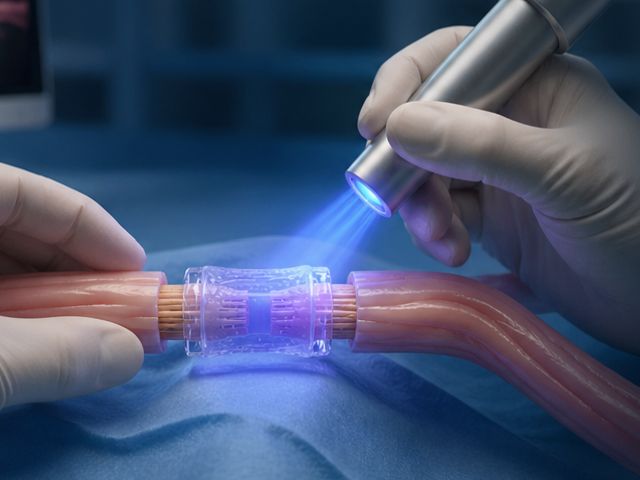 The United States has approved a medical technology that could revolutionize nerve reconstruction
surgery: a light-activated, bioabsorbable system that allows severed nerves to be joined without the
need for traditional microscopic sutures. The FDA granted De Novo Approval to TISSIUM for its COAPTIUM®
CONNECT with TISSIUM Light device, making it the first sutureless peripheral nerve coaptation system
authorized in the U.S.
The United States has approved a medical technology that could revolutionize nerve reconstruction
surgery: a light-activated, bioabsorbable system that allows severed nerves to be joined without the
need for traditional microscopic sutures. The FDA granted De Novo Approval to TISSIUM for its COAPTIUM®
CONNECT with TISSIUM Light device, making it the first sutureless peripheral nerve coaptation system
authorized in the U.S.How technology works
In peripheral nerve injuries—common in the hands, fingers, arms, or legs after accidents
or surgeries—surgeons typically reconnect the nerve ends using microsurgery with extremely fine sutures,
a complex procedure that demands great precision and can cause additional tissue trauma. The new system
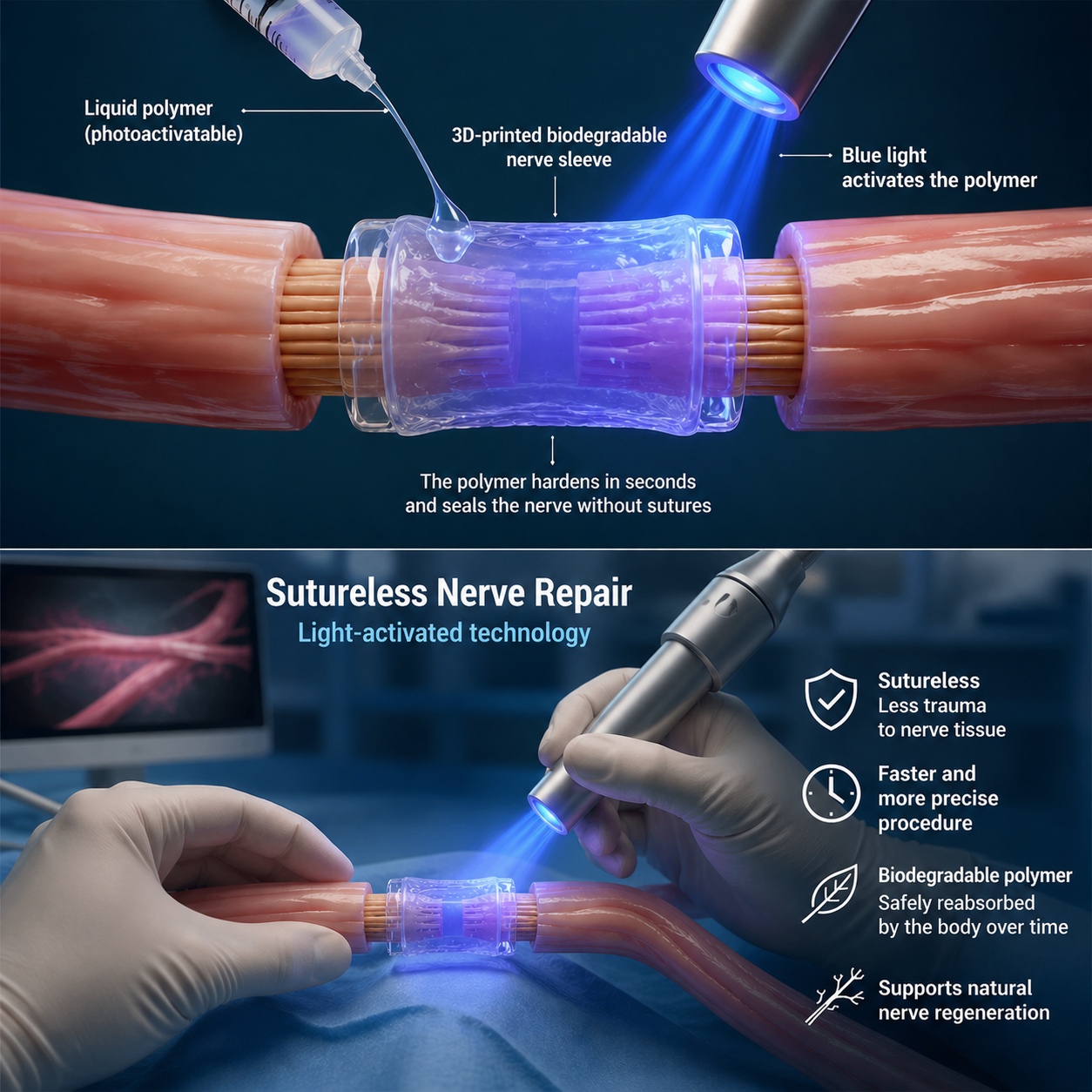
replaces these sutures with two components: A 3D-printed, bioabsorbable, flexible sleeve or chamber that
aligns the nerve ends. A light-activated liquid polymer, applied around the device and hardened in seconds
by a controlled light source. The result is a stable circumferential seal that holds the nerve in position
while the tissue naturally regenerates its connections.
Smart
materials developed from academia
Tissium's technology platform
emerged from research in the laboratories of:
- Robert Langer
- Jeffrey M. Karp
- Maria Pereira
- flexible
- Biocompatible
- photoactivatable
- completely resorbable over time This means that the implant does not remain permanently in the body.
Initial clinical results
According to clinical
data released by the company and subsequently published, a prospective study in patients with digital
nerve injuries showed:
- technical success of the procedure in all treated cases
- functional recovery of mobility of the injured finger
- absence of pain at 12-month follow-up
Why this development matters
Peripheral nerves have a limited capacity for regeneration, and their repair depends
on proper alignment. If reconnection fails, the patient may suffer from: loss of sensation, neuropathic
pain, muscle weakness, and permanent functional disability. Reducing surgical trauma and simplifying
the technique could improve outcomes and broaden access for non-ultra-specialized surgeons.
Beyond the nerves: upcoming applications
Tissium
reported that the same programmable polymer platform could be applied in cases such as cardiovascular
sealing, gastrointestinal hernia repair, soft tissue reconstruction, and complex surgical closures. This
would make the 2025 authorization the first step in a new generation of “smart surgical adhesives.” The
FDA authorized the first light-activated bioabsorbable system for repairing peripheral nerves without
traditional sutures, developed by Tissium from research originating at MIT and Harvard-affiliated hospitals.
Rather than completely replacing all sutures, the innovation initially targets specific cases of peripheral
nerve surgery, where it could reduce complexity, operating time, and additional tissue damage.
References:
- Chemical & Engineering News (ACS), Laura Howes, July 2025.
- Official statement from TISSIUM on FDA De Novo authorization, June 2025.
- Clinical results published in the Journal of Hand Surgery Global Online (2026).
One for all and all for one